Myth vs. Reality: Do I Have to Have a Reason for Filing Bankruptcy?

Published
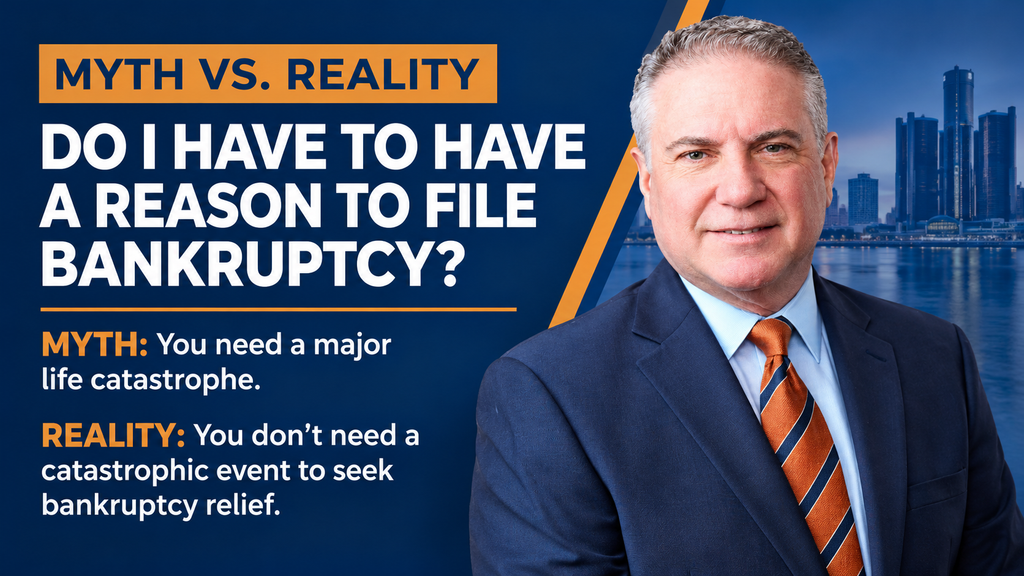
Myth: You have to experience a major life-changing event, such as losing your job, going through a divorce, or suffering a serious illness, before you can file for bankruptcy.
Reality: You do not have to experience a catastrophic event or have a compelling reason to file bankruptcy. If you are struggling financially and cannot realistically repay your debts, bankruptcy may be an option worth exploring.
Table of Contents
- Do You Have to Have a Compelling Reason to File Bankruptcy?
- What Are Some Common Reasons People File Bankruptcy?
- What If Nothing Catastrophic Has Happened to Me?
- Will the Bankruptcy Trustee Ask Me Why I Am Filing Bankruptcy?
- Does the Bankruptcy Court Require Me to Prove That I Have a Good Reason?
- You Do Not Have to Feel Guilty About Considering Bankruptcy
- The Bottom Line: You Do Not Need a Catastrophic Event to File Bankruptcy
Do You Have to Have a Compelling Reason to File Bankruptcy?
One of the misconceptions I encounter in my bankruptcy practice is that people believe they must have a good reason for filing bankruptcy. They think they have to be able to point to some major event in their lives that caused their financial problems before they can seek relief under the Bankruptcy Code.
After more than 35 years of practicing bankruptcy law and representing more than 25,000 people, I can tell you that this simply is not true.
Many of my clients have experienced significant life events that contributed to their financial difficulties. Others have not. They may have been working, paying their bills, and trying to make ends meet for years, only to find that their income no longer stretches far enough to cover their living expenses and debt payments.
You do not have to be the victim of a financial catastrophe to file bankruptcy.
There is no requirement under the Bankruptcy Code that you must lose your job, get divorced, become seriously ill, or experience some other extraordinary event before you can seek bankruptcy relief.
What Are Some Common Reasons People File Bankruptcy?
In my practice, I represent people from all walks of life. Their circumstances vary considerably, and there is no single explanation for why someone finds themselves struggling with debt.
Some of my clients have experienced a major life event that has substantially changed their financial situation. These events can include:
- Divorce or separation. Maintaining two households instead of one can dramatically increase living expenses. In addition, the division of marital assets and debts can leave one or both spouses struggling financially.
- Loss of employment. Losing a job, even temporarily, can make it difficult to keep up with mortgage payments, car payments, credit cards, and other monthly obligations.
- The birth of another child. Families grow, but their incomes do not always grow with them. Childcare, medical expenses, food, clothing, and other necessities can place a substantial strain on a household budget.
- Retirement. Many people experience a significant reduction in income when they retire. They may have accumulated credit card debt or other obligations during their working years and discover that their retirement income is insufficient to keep up with those payments.
- Illness or medical problems. A serious illness can result in substantial medical expenses, missed work, reduced income, or a combination of all three.
- Loss of overtime or reduced working hours. Some households depend on overtime pay to make their monthly budgets work. When those hours disappear, the bills do not necessarily decrease along with the paycheck.
- Other unexpected expenses. A major car repair, necessary home repairs, or another unanticipated expense can push an already strained household over the edge financially.
These are all legitimate circumstances that can contribute to a bankruptcy filing. However, they are not prerequisites for filing bankruptcy.
What If Nothing Catastrophic Has Happened to Me?
This is an important question because many people who contact my office have not experienced any of the events described above.
They have not lost their jobs. They have not gone through a divorce. They have not suffered a serious illness. They may still be working full-time and earning a reasonably steady income.
Their problem is that they simply cannot make the numbers work anymore.
The cost of housing, groceries, utilities, insurance, transportation, and other everyday necessities can consume a substantial portion of a family’s income. Add credit card payments, personal loans, medical bills, and other debts, and there may be very little left at the end of the month.
Some people have been relying on credit cards to cover ordinary living expenses. Others have been making minimum payments for years without making meaningful progress toward paying down their balances. Still others have depleted their savings trying to keep up.
Eventually, they reach a point where they realize that continuing to make minimum payments is not a realistic long-term solution.
They do not necessarily need a dramatic event to explain their financial difficulties. Sometimes, their income simply cannot keep up with their expenses and debt obligations.
I see this situation regularly in my bankruptcy practice. People are working, trying to do the right thing, and attempting to meet their financial responsibilities. They are not necessarily reckless spenders, and they do not have to be.
Sometimes, despite their best efforts, the numbers simply do not work.
You should not assume that bankruptcy is unavailable to you merely because you cannot point to one particular event that caused your financial problems.
Will the Bankruptcy Trustee Ask Me Why I Am Filing Bankruptcy?
In a Chapter 7 bankruptcy case, you will generally attend a meeting of creditors, commonly called the 341 meeting. In the Eastern District of Michigan, these meetings are generally conducted by Zoom.
During this meeting, the bankruptcy trustee reviews your petition and schedules, asks questions about your financial circumstances, and verifies information relevant to your case.
It is not unusual for the trustee to ask whether a particular event or change in circumstances caused you to file bankruptcy. For example, the trustee may want to know whether you lost your job, experienced a divorce, incurred medical expenses, or suffered some other financial setback.
If you have experienced one of these events, you should answer the question honestly and explain the circumstances.
But what if nothing specific happened?
You may simply explain that your expenses and debt payments have become too much for your income to support. You may have accumulated credit card debt over several years, experienced rising living expenses, or reached the point where you can no longer afford to keep making the required payments.
There is nothing inherently wrong with that explanation.
The fact that you cannot identify one specific event that precipitated your bankruptcy does not, by itself, prevent you from filing or receiving a discharge.
The trustee’s questions are part of the process of understanding your financial circumstances. You should answer truthfully and completely, rather than feel that you must come up with a dramatic explanation to justify your decision.
Does the Bankruptcy Court Require Me to Prove That I Have a Good Reason?
Generally, no. There is no universal requirement that a person filing bankruptcy must demonstrate that a divorce, job loss, medical emergency, or other extraordinary event caused their financial problems.
However, this does not mean that every bankruptcy filing automatically qualifies for a discharge. You must still satisfy the applicable requirements of the Bankruptcy Code.
For example, Chapter 7 eligibility may depend on your income, household circumstances, and the applicable means test. A case may also raise issues involving the accuracy of the bankruptcy paperwork, the disclosure of assets, financial transactions, or other statutory requirements.
In certain circumstances, a case can be challenged based on abuse under the Bankruptcy Code. The particular facts and applicable law matter.
But these are different questions from whether you have experienced a sufficiently compelling life event.
You do not have to prove that your financial problems were caused by circumstances beyond your control before you can seek bankruptcy relief.
You Do Not Have to Feel Guilty About Considering Bankruptcy
I often speak with people who have spent years trying to avoid bankruptcy. They may have borrowed money from family members, transferred balances between credit cards, used savings to pay bills, or continued making minimum payments because they believed they had a moral obligation to repay every dollar they owed, regardless of the circumstances.
Some feel embarrassed about even contacting a bankruptcy attorney. Others believe that because they are still employed, they should somehow be able to solve their financial problems without help.
I understand those concerns. Many people take their financial obligations seriously and do not want to walk away from debts they once expected to repay.
But there is a difference between accepting responsibility for your obligations and continuing to struggle indefinitely with debts that you cannot realistically repay.
Bankruptcy exists under federal law to provide qualifying debtors with an opportunity for financial relief and, where applicable, a fresh start.
You do not have to wait until you are completely broke, have exhausted every dollar of savings, or have experienced a personal tragedy before exploring whether bankruptcy is appropriate.
In fact, waiting until your financial situation becomes even worse may leave you with fewer options than you had earlier.
The Bottom Line: You Do Not Need a Catastrophic Event to File Bankruptcy
After decades of practicing bankruptcy law, I have represented people whose financial difficulties were triggered by a sudden and devastating event. I have also represented many people whose financial problems developed gradually over time.
Both situations can lead someone to consider bankruptcy.
A divorce, job loss, medical problem, retirement, or reduction in overtime can certainly explain why someone has fallen behind on their bills. But these events are not a requirement for filing bankruptcy.
If you are struggling to pay your debts, the important question is not whether you have a sufficiently compelling story to explain your financial situation. The important question is whether bankruptcy is an appropriate legal and financial solution given your income, expenses, assets, debts, and overall circumstances.
That is something an experienced bankruptcy attorney can help you evaluate.
At my office, I have spent more than 35 years helping individuals and families throughout the Eastern District of Michigan understand their bankruptcy options. My practice focuses exclusively on bankruptcy, and I have represented more than 25,000 people facing financial difficulties.
You do not have to wait for a catastrophe to seek help.
If you are struggling with debt and wondering whether bankruptcy might be an option, I encourage you to contact my office. We can review your circumstances, discuss the available options, and help you determine whether bankruptcy makes sense for you.
You do not have to justify your financial difficulties by pointing to a tragedy. You simply need to understand your options and make an informed decision about your financial future.
Law Offices of Walter Metzen
Phone: 313-962-4656
detroitbankruptcylawyer@gmail.com