How to Dispute Errors on Your Credit Report

Published
Your credit report is one of the most important records maintained about your financial history. It can affect your ability to obtain a mortgage, finance a car, obtain a credit card, rent a home and, in some circumstances, even obtain employment.
For that reason, I encourage my bankruptcy clients—and anyone who is concerned about their financial situation—to periodically review their credit reports.
The good news is that checking your credit report is free, and if you find information that is genuinely inaccurate, you have the right to dispute it.
Table of Contents
- How Do I Get a Free Credit Report?
- What Should I Look For?
- Credit Karma Is Helpful—But Understand What You Are Looking At
- Is That Debt Really an Error?
- How Do I Dispute an Error?
- What Happens After I File the Dispute?
- What If the Credit Reporting Agency Says the Information Is Accurate?
- Be Careful About “Credit Repair” Promises
- My Advice: Check Your Reports Before You Need Credit
How Do I Get a Free Credit Report?
There are three major nationwide credit reporting agencies:
- Equifax
- Experian
- TransUnion
The best place to obtain your free credit reports is AnnualCreditReport.com. It is the federally authorized website for obtaining your free credit reports.
You should obtain all three reports and actually look through them. Do not assume that because your Experian report is correct, your Equifax and TransUnion reports must also be correct.
The information contained in the three reports can be different because the credit bureaus do not necessarily receive identical information from every creditor.
What Should I Look For?
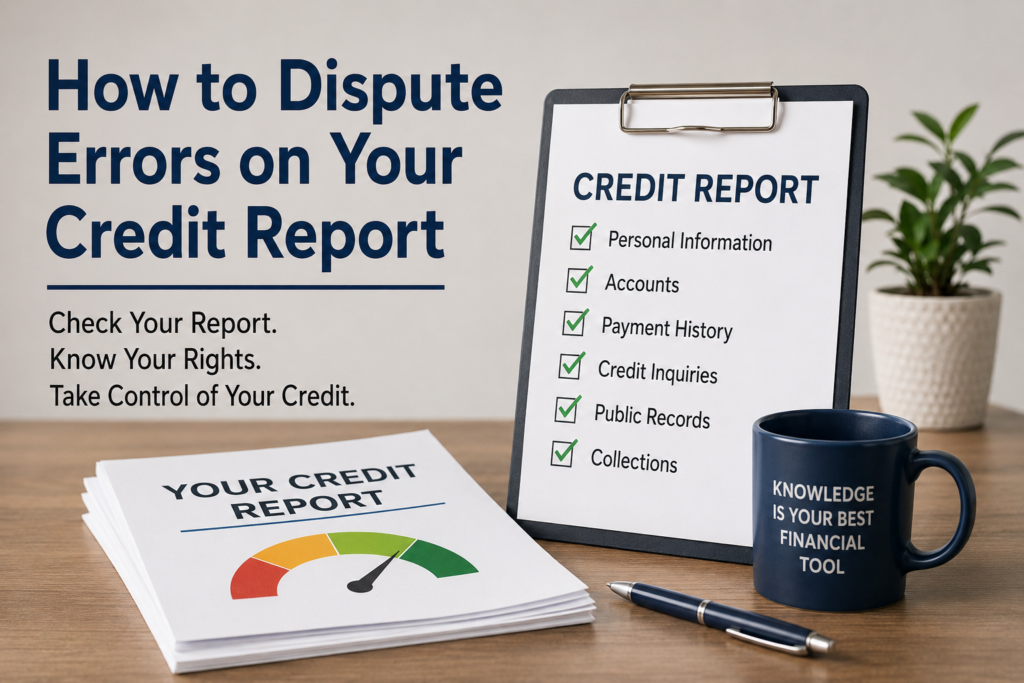
When you receive your credit reports, look carefully at the accounts and information being reported.
Some common errors include:
- Accounts that do not belong to you;
- Another person’s account appearing on your report;
- Accounts incorrectly reported as delinquent;
- A debt that has already been paid but is still being reported as unpaid;
- Incorrect account balances;
- Incorrect credit limits;
- An account reported as open when it was closed;
- Incorrect dates;
- The same debt appearing more than once;
- Incorrect personal information; and
- Accounts resulting from identity theft.
Credit Karma Is Helpful—But Understand What You Are Looking At
Many people I talk to use Credit Karma to monitor their credit. There is nothing wrong with that. Credit Karma can be a useful tool for receiving alerts when something changes on your credit report.
Credit Karma can help you identify accounts or other information that deserves a closer look.
But there is an important distinction:
Credit Karma is not a substitute for reviewing your actual credit reports.
If Credit Karma sends you an alert, I recommend going to the underlying credit report and determining exactly what has changed.
And remember that a credit score is not the same thing as a credit report. Your score is a number calculated from information contained in your credit file. If you want to determine whether a creditor is reporting something incorrectly, you need to examine the actual report.
Is That Debt Really an Error?
This is an important point.
More often than not, what a person believes is an error turns out to be a legitimate debt.
For example, I have had clients tell me that a collection account on their credit report is “wrong” because they do not recognize the collection company. Sometimes, however, the collection company is simply a debt collector that purchased or was assigned the right to collect an old debt.
Similarly, a creditor may have changed its name, sold the account to another company, or hired a collection agency to report the debt.
Before disputing something, take a moment to investigate it.
If you recognize the debt and the information being reported is accurate, you generally cannot have accurate negative information removed simply because you do not like having it on your credit report.
On the other hand, if the debt is not yours, the balance is wrong, the account status is wrong, the payment history is wrong, or some other information is genuinely inaccurate, you have the right to dispute it.
How Do I Dispute an Error?
The process is relatively straightforward.
You can dispute errors online directly with the credit reporting agency. You do not necessarily need to hire a credit-repair company to do this for you.
Here are the official online dispute pages for the three major credit reporting agencies:
- Equifax: Start an Equifax dispute
- Experian: Start an Experian dispute
- TransUnion: Start a TransUnion dispute
If the error appears on only one report, you should dispute it with that particular credit reporting agency.
If the same error appears on all three reports, you should generally dispute it with all three.
When submitting a dispute, be specific.
Do not simply write:
“This account is wrong.”
Instead, explain exactly what is inaccurate.
For example:
“This account is being reported with a balance of $4,200. The account was paid in full on June 15, 2025. I am requesting that the balance and account status be corrected.”
If you have documentation supporting your position, provide it.
That could include a payment confirmation, account statement, settlement letter, court document, correspondence from the creditor or other documentation demonstrating that the information being reported is inaccurate.
Keep copies of everything you submit.
What Happens After I File the Dispute?
Once you submit your dispute, the credit reporting company generally must investigate it.
The credit reporting agency will typically send the dispute and the relevant information you provided to the company that furnished the information—the creditor, lender, collection agency or other business that supplied the information.
The furnisher then has an opportunity to investigate.
If the information is determined to be inaccurate or cannot be verified, it should be corrected or removed.
Generally, the credit reporting company must complete its investigation within 30 days. There are circumstances in which the investigation period can extend to 45 days. After completing the investigation, the credit reporting company generally must notify you of the results within five business days.
If the dispute results in a correction, you should receive an updated credit report.
What If the Credit Reporting Agency Says the Information Is Accurate?
This is where some consumers become frustrated.
You file a dispute, the credit reporting agency investigates, and you receive a response saying that the information has been “verified” or that the creditor has confirmed it is accurate.
If you believe the information is still wrong, you are not necessarily out of options.
You can dispute the information again, particularly if you have additional documentation that supports your position. You should also consider disputing the information directly with the company that furnished it to the credit reporting agency.
If the dispute remains unresolved, federal law also provides mechanisms for adding a statement explaining the dispute to your credit file.
If you believe a credit reporting company is not properly handling your dispute, you can also file a complaint with the Consumer Financial Protection Bureau.
Be Careful About “Credit Repair” Promises
There is an entire industry built around “credit repair.”
Be careful.
If someone tells you that they can remove every negative item from your credit report, that should be a red flag.
There is a legitimate difference between correcting inaccurate information and removing accurate negative information.
You have the legal right to dispute inaccurate information yourself, and you generally do not need to pay a credit repair company simply to submit a legitimate dispute on your behalf.
My Advice: Check Your Reports Before You Need Credit
You do not want to discover an error on your credit report the day before you are trying to buy a house.
Make checking your credit reports part of your regular financial routine.
Start with AnnualCreditReport.com. Obtain all three reports and review them carefully. If you use Credit Karma, use its alerts as an additional way of monitoring your credit—but go back to the underlying credit report when something changes.
And remember the most important rule:
Do not dispute something simply because you do not recognize the name of the creditor. Investigate it first.
But if you determine that something really is inaccurate, do not ignore it. You have the right to dispute inaccurate information, and in many cases you can start the entire process online yourself—without paying anyone to do it for you.
If you are considering bankruptcy and are concerned about what appears on your credit reports, bring those reports with you when you meet with a bankruptcy attorney. A careful review of your debts, collections, judgments, liens and other information can be an important part of determining what your options are.ining what your options are.