When Will I Get My Discharge in a Chapter 7 Bankruptcy?

Published
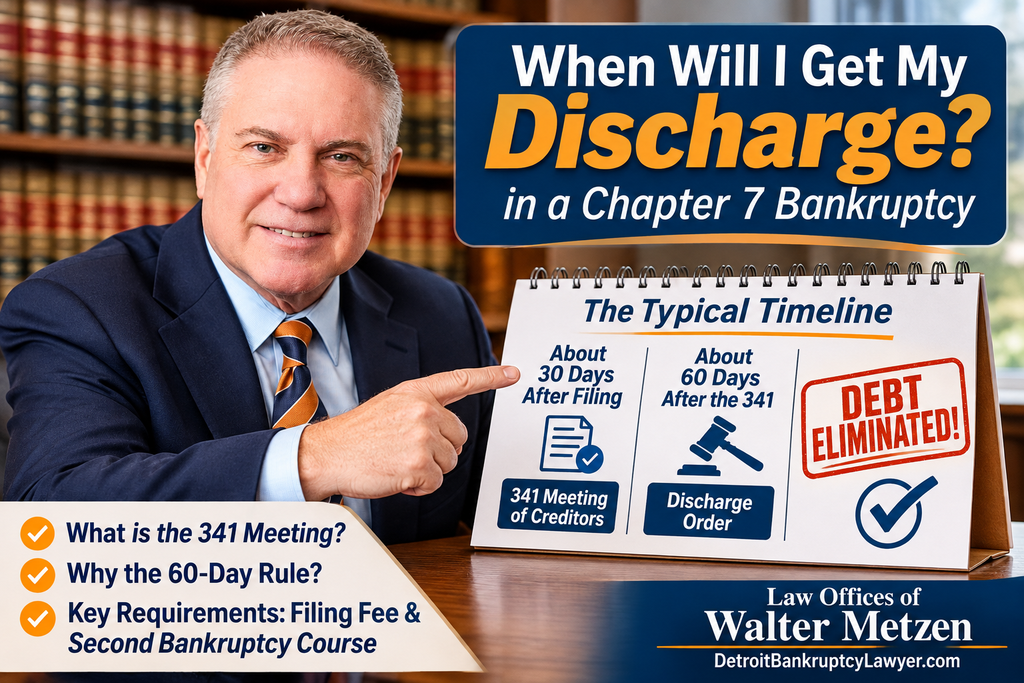
One of the most common questions I hear from people filing Chapter 7 bankruptcy is: “When will I receive my bankruptcy discharge?”
After struggling with bills, collection calls, lawsuits, garnishments, and the stress of overwhelming debt, most people want to know when they can finally put their financial problems behind them and get a fresh start.
The good news is that a typical Chapter 7 bankruptcy case moves relatively quickly. In most cases, you will receive your bankruptcy discharge approximately 90 days after your bankruptcy case is filed.
Let me explain how the process works and what you need to do to make sure there are no delays in receiving your discharge.
Table of Contents
- Step 1: Your Chapter 7 Bankruptcy Case Is Filed
- Step 2: Your 341 Meeting of Creditors – Approximately 30 Days After Filing
- Step 3: Your Bankruptcy Discharge – Approximately 60 Days After Your 341 Meeting
- Two Things That Can Prevent You From Receiving Your Discharge
- What Happens After the Bankruptcy Judge Signs Your Discharge?
- How Long Does It Take to Get a Chapter 7 Bankruptcy Discharge in Michigan?
- My Advice: Don’t Let Something Simple Delay Your Bankruptcy Discharge
Step 1: Your Chapter 7 Bankruptcy Case Is Filed
Once your bankruptcy petition is filed with the United States Bankruptcy Court, your case officially begins.
One of the most important benefits of filing bankruptcy is the automatic stay. This is a federal court protection that generally stops creditors from continuing collection activities, including lawsuits, garnishments, collection calls, and most other efforts to collect debts.
After your case is filed, the court assigns a bankruptcy judge and a Chapter 7 bankruptcy trustee. The trustee is responsible for reviewing your bankruptcy paperwork, asking questions about your financial situation, and determining whether there are any assets available for creditors.
Your bankruptcy case is now moving through the court system.
Step 2: Your 341 Meeting of Creditors – Approximately 30 Days After Filing
Approximately 30 days after your bankruptcy case is filed, you will have what is called a 341 Meeting of Creditors.
The meeting gets its name from Section 341 of the Bankruptcy Code. It is a required meeting between you, your bankruptcy trustee, and, if they choose to appear, your creditors.
Although it is called a Meeting of Creditors, most creditors do not attend. In a typical consumer Chapter 7 bankruptcy case, the only people participating are the bankruptcy trustee, the debtor, and the debtor’s attorney.
In the Eastern District of Michigan, these meetings are generally conducted by Zoom.
During the meeting, the bankruptcy trustee will place you under oath and ask you questions about your bankruptcy petition and financial circumstances. Some of the questions may include:
- Did you review your bankruptcy petition before it was filed?
- Is everything in your bankruptcy paperwork accurate and complete?
- Have you listed all of your assets and debts?
- Have you transferred or given away any property?
- Have you recently repaid any family members or friends?
- Are you expecting an inheritance, tax refund, or other money?
The purpose of the meeting is to allow the trustee to examine your financial affairs and determine whether there are any assets that might be available for creditors.
For most people filing Chapter 7 bankruptcy, the 341 meeting is relatively short and straightforward. It typically lasts approximately 5 to 10 minutes.
Once your 341 meeting is completed, you are one important step closer to receiving your bankruptcy discharge.
Step 3: Your Bankruptcy Discharge – Approximately 60 Days After Your 341 Meeting
This is the part most people are waiting for!
Under the Bankruptcy Code, creditors generally have 60 days from the first date set for your 341 Meeting of Creditors to file an objection to your discharge or, in certain circumstances, to challenge the dischargeability of a particular debt.
In a typical Chapter 7 case where there are no complications or objections, the bankruptcy judge will enter your Order of Discharge approximately 60 days after the first date set for your 341 meeting.
Notice that I said the first date set for the meeting. Even if your 341 meeting is continued to another date, the 60-day deadline generally runs from the original date, not the date the meeting is eventually completed.
For example, let’s assume your bankruptcy case is filed on January 1.
- January 1: Your Chapter 7 bankruptcy petition is filed.
- January 30: Your first scheduled 341 Meeting of Creditors.
- March 31: Your bankruptcy discharge is generally entered.
These dates are approximate, but they illustrate why most Chapter 7 cases result in a discharge approximately 90 days after filing.
Your discharge is the court order that legally eliminates your personal obligation to pay most of the debts included in your bankruptcy case.
This is the fresh start you filed bankruptcy to obtain!
Two Things That Can Prevent You From Receiving Your Discharge
Although the Chapter 7 bankruptcy process is relatively quick, there are two important requirements that you must satisfy before the court will issue your discharge.
1. Your Bankruptcy Filing Fee Must Be Paid in Full
The bankruptcy court will not enter your discharge if you have not paid your bankruptcy filing fee in full.
Currently, the Chapter 7 bankruptcy filing fee is $338.
Some people pay the entire filing fee when their case is filed. Others qualify to pay the fee in installments.
If you elect to pay the filing fee in installments, you must make sure that the entire amount is paid before the court enters your discharge.
I always remind my clients that filing the bankruptcy case is only the first step. You must also satisfy the court’s filing fee requirements to receive your discharge.
2. You Must Complete the Second Bankruptcy Course (Debtor Education)
There are two separate bankruptcy courses required in a typical Chapter 7 bankruptcy case.
The first course, called the Credit Counseling Course, must generally be completed before your bankruptcy case is filed.
The second course is called the Debtor Education Course or Financial Management Course.
This second course is different from the first one. It is designed to provide information about budgeting, managing money, and making better financial decisions after bankruptcy.
You must complete this second course and have the certificate of completion filed with the bankruptcy court before you can receive your discharge.
Simply taking the course is not enough. The certificate must actually be filed with the court.
I encourage my clients to complete this course as soon as possible after their 341 meeting. There is no reason to wait until the last minute.
If you fail to complete the course and file the certificate within the applicable deadline, you may lose your opportunity to receive a discharge in your case. In some circumstances, you may have to pay an additional filing fee to reopen the case and request your discharge.
This is an entirely avoidable problem.
What Happens After the Bankruptcy Judge Signs Your Discharge?
Once the bankruptcy judge enters your Order of Discharge, the bankruptcy court sends a copy of the discharge order to all creditors and other parties entitled to notice in your bankruptcy case.
This is important because your creditors are officially notified that you have received a discharge in bankruptcy.
The discharge order prohibits creditors from attempting to collect discharged debts from you personally.
In other words, the bankruptcy court has officially eliminated your legal obligation to pay those debts.
You should also receive a copy of your discharge order. I recommend keeping this document with your important financial and legal records. You may need it in the future if a creditor mistakenly attempts to collect a discharged debt.
Keep in mind that not every debt is discharged in Chapter 7 bankruptcy. Certain obligations, including most student loans, domestic support obligations such as child support and alimony, and certain taxes, may survive bankruptcy. There are also circumstances where individual debts may be determined to be nondischargeable.
Nevertheless, for most people filing Chapter 7, the discharge eliminates the overwhelming majority of their unsecured debt.
How Long Does It Take to Get a Chapter 7 Bankruptcy Discharge in Michigan?
For most consumers filing Chapter 7 bankruptcy in the Eastern District of Michigan, the timeline is relatively predictable:
- Day 1: Bankruptcy case is filed.
- Approximately Day 30: You attend your 341 Meeting of Creditors.
- Approximately Day 90: Your bankruptcy discharge is entered by the bankruptcy judge.
Of course, every bankruptcy case is different. A trustee investigation, a motion filed by a creditor, an objection to discharge, or other complications can delay the process.
But in an ordinary Chapter 7 case, where the debtor has provided all requested documents, attended the 341 meeting, paid the filing fee, and completed the second bankruptcy course, receiving a discharge in approximately 90 days is typical.
My Advice: Don’t Let Something Simple Delay Your Bankruptcy Discharge
After representing more than 25,000 people in bankruptcy over my 35-year legal career, I have seen how important the bankruptcy discharge is to someone trying to get their financial life back on track.
The Chapter 7 process is not particularly complicated when everything is handled properly. But there are requirements that must be satisfied.
Make sure you attend your 341 Meeting of Creditors, respond to any requests from your bankruptcy trustee, pay your filing fee in full, and complete your second bankruptcy course.
Most importantly, don’t forget to have the certificate of completion filed with the court.
The entire purpose of filing Chapter 7 bankruptcy is to obtain your discharge and eliminate your debts. I want to make sure that nothing unnecessarily delays that result.
Have Questions About Filing Chapter 7 Bankruptcy in Michigan?
If you are considering filing Chapter 7 bankruptcy in Michigan, or have already filed and have questions about when you will receive your discharge, I would be happy to discuss your situation.
My practice is devoted exclusively to bankruptcy. I have represented thousands of individuals and families throughout the Eastern District of Michigan and understand how the bankruptcy process works from beginning to end.
Call my office at 313-962-4656 to discuss your situation and learn how Chapter 7 bankruptcy may help you obtain the fresh start you deserve.
Walter Metzen, Attorney at Law
Law Offices of Walter Metzen
DetroitBankruptcyLawyer.com