Myth vs. Reality: You Can Only File Bankruptcy Once in Your Life

Published
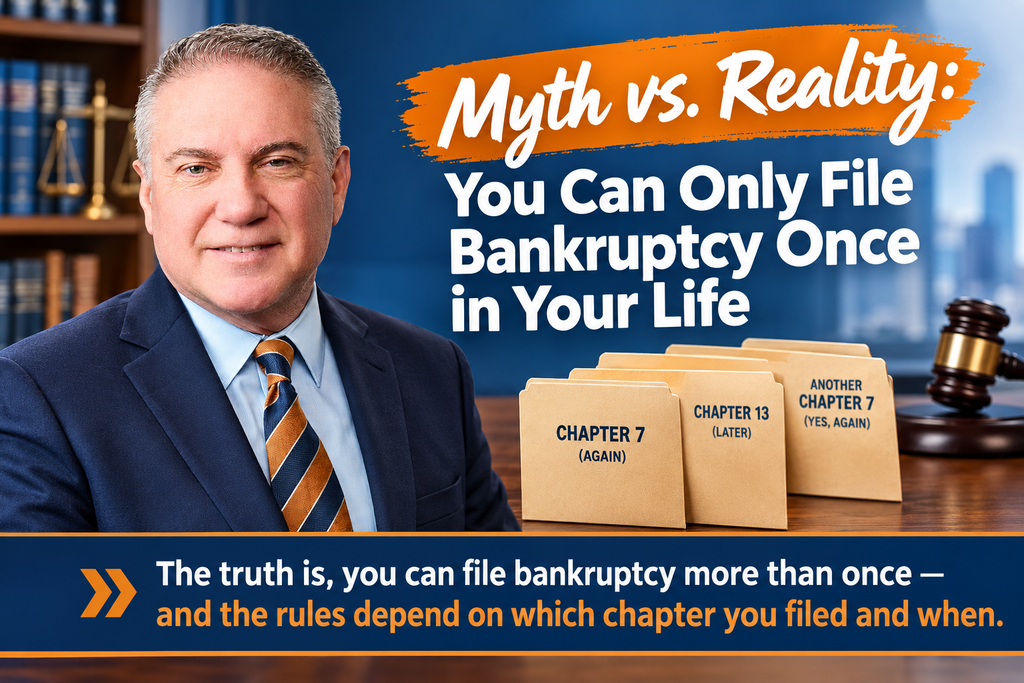
One of the most common misconceptions I hear from people considering bankruptcy is that if they have filed bankruptcy before, they have used up their one opportunity and can never file again.
That is simply not true!
I have practiced bankruptcy law for 35 years, and during that time, I have filed multiple bankruptcy cases for both individuals and married couples. Life happens. People lose jobs, get divorced, experience medical problems, face unexpected expenses, or find themselves overwhelmed by debt years after successfully completing a previous bankruptcy.
Sometimes, even after receiving a fresh financial start, circumstances beyond a person’s control can lead to financial problems again. Other times, people make financial decisions they later regret. Whatever the reason, having filed bankruptcy in the past does not automatically prevent you from filing another case.
The important question is not whether you have filed bankruptcy before. It is which type of bankruptcy you filed, when you filed it, whether you received a discharge, and what you need to accomplish in a new case.
Let’s separate the myths from the reality.
Table of Contents
- Myth: You Can Only File Chapter 7 Bankruptcy Once in Your Lifetime
- Myth: If You Filed Chapter 7, You Cannot File Chapter 13
- Myth: You Can File Chapter 13 as Often as You Want Without Restrictions
- Myth: Filing Another Bankruptcy Automatically Stops Creditors From Taking Action
- Can a Married Couple File Bankruptcy More Than Once?
- What If You Filed Chapter 13 and Now Need Chapter 7?
- The Bottom Line: Bankruptcy Is Not a Once-in-a-Lifetime Opportunity
Myth: You Can Only File Chapter 7 Bankruptcy Once in Your Lifetime
Reality: You can file Chapter 7 bankruptcy more than once.
When I first started practicing bankruptcy law in the early 1990s, a person who received a Chapter 7 discharge generally had to wait six years before receiving another Chapter 7 discharge.
That changed in 2005 when Congress passed the Bankruptcy Abuse Prevention and Consumer Protection Act, commonly known as BAPCPA. Among its many changes, this federal legislation increased the waiting period between Chapter 7 discharges from six years to eight years.
Under the current law, if you received a Chapter 7 discharge in a previous case, you generally must wait eight years from the date you filed that previous case before filing another Chapter 7 case and receiving a new discharge.
Notice that the eight-year period is measured from the filing date of the earlier bankruptcy case, not the date the discharge was entered.
This distinction is important because a bankruptcy case can take several months to complete. The clock does not start on the day you receive your discharge.
For example, if you filed Chapter 7 bankruptcy in October 2018 and received a discharge a few months later, you would generally become eligible to receive another Chapter 7 discharge in a case filed in October 2026, assuming all other requirements are satisfied.
The bottom line is that Chapter 7 bankruptcy is not a once-in-a-lifetime opportunity. You simply have to understand the waiting period that applies to your circumstances.
Myth: If You Filed Chapter 7, You Cannot File Chapter 13
Reality: You may be able to file Chapter 13 much sooner after a Chapter 7 bankruptcy.
Chapter 7 and Chapter 13 bankruptcy serve different purposes. Chapter 7 generally eliminates qualifying unsecured debts, while Chapter 13 allows eligible individuals with regular income to reorganize their debts through a court-approved repayment plan.
The waiting period for a discharge in Chapter 13 following a previous Chapter 7 is generally four years, measured from the filing date of the earlier Chapter 7 case.
However, this does not mean you must always wait four years to file Chapter 13.
You may be able to file Chapter 13 before that four-year period expires. You simply generally cannot receive a Chapter 13 discharge if the prior Chapter 7 discharge falls within the applicable four-year period.
Why would someone file Chapter 13 without being eligible for a discharge?
There can be legitimate reasons, depending on the facts of the case. For example, a Chapter 13 filing may provide a way to address mortgage arrears, stop a foreclosure, or manage certain debts through a repayment plan. Whether that strategy will work depends on the circumstances, applicable law, and the particular debts involved.
There are also situations where a person who previously filed Chapter 13 may qualify to file Chapter 7, subject to the applicable waiting periods and other eligibility requirements.
The important point is that the rules differ depending on which bankruptcy chapter you filed previously and which chapter you are considering now.
Myth: You Can File Chapter 13 as Often as You Want Without Restrictions
Reality: Chapter 13 can be filed more frequently, but there are important rules governing repeat filings and discharges.
One of the advantages of Chapter 13 bankruptcy is that the waiting periods for receiving a discharge are different from those applicable to Chapter 7.
Generally, you must wait two years between Chapter 13 bankruptcy filings to qualify for another Chapter 13 discharge. If you previously received a Chapter 7 discharge, the general waiting period before qualifying for a Chapter 13 discharge is four years from the filing date of the earlier Chapter 7 case.
However, these discharge waiting periods do not necessarily prohibit you from filing a new Chapter 13 case sooner.
For example, I have encountered situations where someone previously filed Chapter 7 bankruptcy but later fell behind on mortgage payments and faced foreclosure. Depending on the circumstances, filing Chapter 13 may provide an opportunity to stop the foreclosure and establish a plan to catch up on missed mortgage payments, even when the debtor is not yet eligible for another discharge.
That distinction is critical: being eligible to file bankruptcy and being eligible to receive a discharge are two different things.
There are also rules that can limit the protection a person receives when filing another bankruptcy case shortly after a previous case was dismissed.
Myth: Filing Another Bankruptcy Automatically Stops Creditors From Taking Action
Reality: The automatic stay may be limited or unavailable in certain repeat filings.
When you file bankruptcy, the automatic stay generally takes effect immediately. It is a powerful legal protection that stops most collection activities, including lawsuits, wage garnishments, and foreclosure proceedings, subject to certain exceptions.
However, Congress changed the law in 2005 to address repeat bankruptcy filings, particularly cases dismissed and refiled in an effort to delay creditors.
These rules are especially important when someone has filed bankruptcy recently and the previous case was dismissed.
What happens if you file bankruptcy again within one year?
The rules generally depend on how many bankruptcy cases you had pending during the preceding year that were dismissed.
1. One previous bankruptcy case dismissed within the past year
If you had one prior bankruptcy case dismissed within the preceding year, the automatic stay in your new case generally terminates after 30 days unless you obtain a court order extending it.
You must act quickly. A motion requesting an extension must be filed, and the court must conduct the required hearing before the 30-day period expires. You generally must demonstrate that the new case was filed in good faith.
2. Two or more previous bankruptcy cases dismissed within the past year
If you had two or more bankruptcy cases dismissed within the preceding year, the automatic stay generally does not take effect when you file the new case.
You may ask the court to impose the stay, but you must file the appropriate motion within 30 days and establish the required good faith. Until the stay is imposed, creditors generally may continue collection activities that would otherwise be prohibited by the stay.
These restrictions do not mean that you can never file another bankruptcy case. They mean that the timing and circumstances of the earlier cases can make a new filing more complicated.
There are also circumstances in which a debtor may be subject to a separate statutory restriction on refiling, so the reason for an earlier dismissal matters.
Can a Married Couple File Bankruptcy More Than Once?
Absolutely. I have filed multiple bankruptcy cases for both individuals and married couples during my 35 years of practice.
A married couple may file a joint bankruptcy case, and the spouses may later face financial difficulties that require another filing. Each spouse’s prior bankruptcy history must be evaluated to determine eligibility for a discharge and the protection available in a subsequent case.
It is also important to understand that a husband and wife do not necessarily have to file bankruptcy together. Depending on their circumstances, one spouse may file individually while the other does not.
When I evaluate a potential bankruptcy filing, I look at the debts, income, assets, previous bankruptcy filings, and the financial goals of each person involved. The correct strategy depends on the specific facts, not simply on whether someone has filed bankruptcy before.
What If You Filed Chapter 13 and Now Need Chapter 7?
The rules work in the other direction, too.
If you previously filed Chapter 13 and are now considering Chapter 7, you may qualify for a Chapter 7 discharge sooner than someone who previously received a Chapter 7 discharge.
Generally, a Chapter 7 discharge following a Chapter 13 discharge is subject to a six-year waiting period measured from the filing date of the earlier Chapter 13 case. There are important exceptions, including certain cases in which the prior Chapter 13 plan paid all allowed unsecured claims or paid at least 70% of those claims under the statutory good-faith and best-effort requirements.
This is another reason it is important not to assume that the same waiting period applies to every bankruptcy case.
The Bottom Line: Bankruptcy Is Not a Once-in-a-Lifetime Opportunity
After 35 years of practicing bankruptcy law, I understand that financial circumstances can change dramatically over time. Someone who received a Chapter 7 discharge years ago may later experience a medical emergency, divorce, job loss, or another financial setback. A married couple may successfully complete a bankruptcy case and then encounter new problems years later.
The fact that you filed bankruptcy in the past does not automatically mean you cannot file again.
The law establishes specific waiting periods for receiving another discharge, and repeat filings can affect the automatic stay. But there is no universal rule limiting everyone to one bankruptcy in a lifetime.
If you filed bankruptcy previously and are struggling with debt again, do not assume that you have run out of options.
I have helped thousands of individuals and married couples navigate bankruptcy, including people who needed to file more than once. The best starting point is to review your previous case, determine which rules apply, and evaluate whether Chapter 7, Chapter 13, or another approach makes the most sense for your current situation.
If you live in Southeast Michigan and are concerned about debt, foreclosure, wage garnishment, or another financial problem, I invite you to contact my office to discuss your options. Consultations are available by telephone or in person.
Walter Metzen is a Board-Certified Specialist in Consumer Bankruptcy who exclusively practices bankruptcy law and has represented more than 25,000 people during his career.