Published
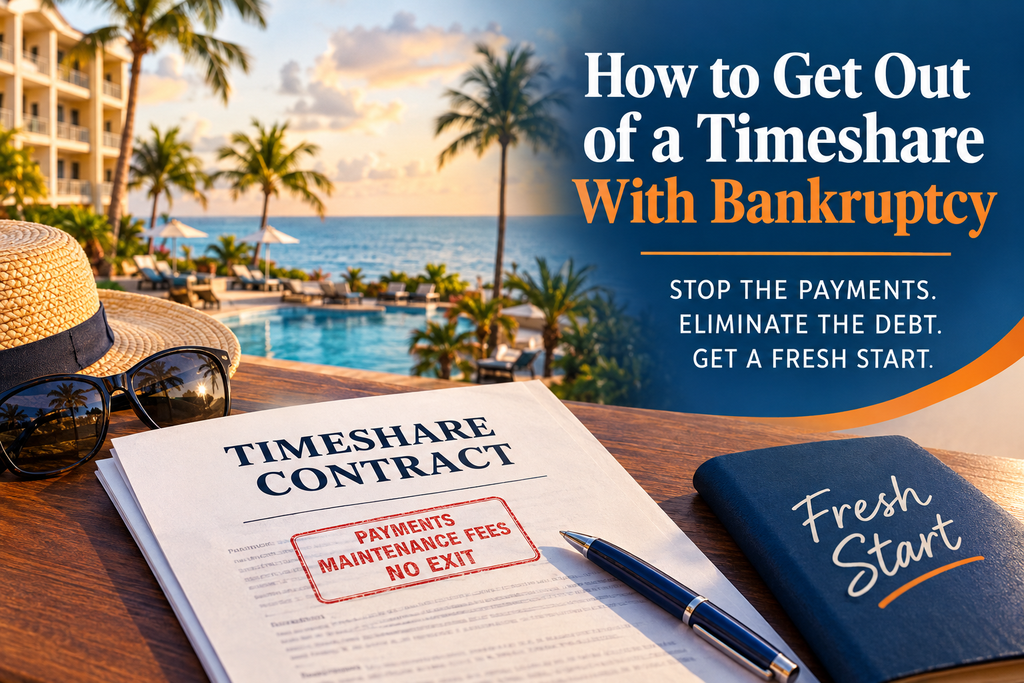
That “Free Vacation” Presentation Can Become a Very Expensive Vacation
Over my more than 30 years practicing bankruptcy law, I have represented hundreds of people who came to me because they wanted to get out of a timeshare or what I often call a “vacation club.”
The story I hear is remarkably similar.
A couple is on vacation. They are offered a gift, free meal, discounted excursion, tickets, or some other incentive if they will attend a short presentation about a vacation resort or vacation club.
They are told it will only take an hour or so.
Then the sales presentation begins.
What was supposed to be a brief presentation can turn into several hours of sales pitches. The couple may meet with several different salespeople or managers. They are shown beautiful photographs and luxurious accommodations and are told how wonderful it will be to have a vacation property available year after year.
And then comes the pressure to buy today.
The salesperson may explain that the price being offered is only available during the presentation, that the special financing is only available that day, or that the particular opportunity will not be available when the couple returns home.
The Federal Trade Commission has specifically warned consumers about these types of timeshare sales presentations, including the use of free vacations or other incentives, prolonged presentations, multiple salespeople, and claims that the offer is available only that day.
After spending hours listening to the sales pitch — and while still in the vacation mindset — people sometimes sign a contract for thousands or even tens of thousands of dollars.
Then they get home.
That is when reality often sets in.
“Why Did We Buy This?”
One of the most common things I hear from timeshare owners is:
“We don’t even use it.”
The idea of having a vacation property sounds wonderful when you are sitting in a beautiful resort looking at pictures of beaches, pools and luxury accommodations.
But actually using a timeshare can be considerably more complicated.
There may be limited availability during the dates you actually want to travel. There may be blackout dates, reservation restrictions, point requirements, exchange fees, additional charges, or competition for desirable dates and locations.
The Federal Trade Commission warns consumers to understand the restrictions associated with points, exchanges and booking availability before purchasing a timeshare. It also notes that owners generally have to pay maintenance fees and other recurring charges even when they do not use the timeshare.
Eventually, many owners reach the same conclusion:
“We are paying a lot of money for something we rarely or never use.”
And the bills don’t necessarily stop.
The Payments Are Only Part of the Problem
A timeshare can involve several different financial obligations.
There may be:
- A purchase price;
- Financing payments;
- Annual maintenance dues;
- Special assessments;
- Taxes and other charges;
- Exchange or reservation fees; and
- Other charges associated with using the vacation club.
Maintenance fees can continue year after year. The FTC specifically advises prospective purchasers to consider increases in annual maintenance fees and emphasizes that owners may have to pay those fees even when they do not use the timeshare.
This can become particularly frustrating when a family has reached the point where it simply doesn’t want the timeshare anymore.
“Why Can’t We Just Sell It?”
This is another question I hear frequently.
Unfortunately, getting rid of a timeshare can be much more difficult than buying one.
The timeshare sales presentation may have made the purchase sound like an asset. But when the owner later wants out, finding someone willing to purchase the timeshare can be extremely difficult.
The FTC warns that timeshares can be difficult, or even impossible, to sell and specifically cautions consumers about companies that promise quick sales, guaranteed buyers or large returns.
This has also created an entirely separate industry of so-called timeshare exit companies.
Be extremely careful.
If someone tells you that they already have a buyer for your timeshare, guarantees that they can get you out, or demands a large upfront fee, you should investigate very carefully before giving them any money. The FTC has repeatedly warned about timeshare resale and exit scams.
In some cases, the owner can work directly with the timeshare company to determine whether it has a voluntary surrender or exit program. That should be investigated before paying an outside company substantial money.
But sometimes the timeshare is only one part of a much larger financial problem.
That’s where bankruptcy may become an important option.
Can Bankruptcy Get Me Out of a Timeshare?
In many circumstances, bankruptcy can provide a way for a person to eliminate the debt and ongoing personal financial obligations associated with a timeshare and obtain a fresh financial start.
The exact result depends upon the type of timeshare, the contract, whether there is financing, whether there is a deed or other property interest, and the laws applicable to the particular timeshare.
In a Chapter 7 bankruptcy, qualifying debts and personal obligations associated with a timeshare can potentially be discharged.
For example, a person may have:
- A timeshare purchase loan;
- Credit card debt used to purchase the timeshare;
- Delinquent maintenance fees;
- Other qualifying unsecured obligations associated with the timeshare.
Bankruptcy can eliminate qualifying personal liability for debts that are discharged.
However, there is an important distinction that every timeshare owner needs to understand:
Discharging a debt is not necessarily the same thing as transferring ownership of a deeded timeshare.
If you own a deeded timeshare, there can be separate issues concerning the ownership interest itself, the timeshare association, and any lien or security interest. The bankruptcy case must be handled with those issues in mind.
That is one reason I recommend that a timeshare owner considering bankruptcy bring all of the timeshare paperwork to the bankruptcy attorney.
Don’t simply bring the latest bill.
Bring the purchase agreement, financing documents, maintenance-fee statements, deed or ownership documents, and any correspondence from the timeshare company.
What About Future Maintenance Fees?
This is an important issue.
A person who is overwhelmed by a timeshare may be looking at an obligation that continues year after year.
The bankruptcy analysis depends upon the nature of the obligation and the particular timeshare arrangement. It is therefore important to determine exactly what the debtor owns, what obligations are personally owed, and what rights the timeshare company or association has.
A bankruptcy attorney should review those documents rather than simply telling someone, “Your timeshare will be gone when you file bankruptcy.”
Bankruptcy Is Not a Magic Eraser for the Property Itself
I want to emphasize this because it is important.
Filing bankruptcy does not automatically mean that a deeded timeshare disappears.
Bankruptcy is primarily about dealing with debts and legal obligations. There may be additional steps necessary to address the ownership interest in the timeshare.
That is why I look at the entire situation when a timeshare owner comes into my office.
The goal is not merely to eliminate a monthly payment.
The goal is to determine whether bankruptcy can provide the person with a genuine fresh financial start and a practical way to deal with the timeshare.
I Have Helped Hundreds of Timeshare Owners
During my more than 30 years practicing bankruptcy law, I have helped hundreds of people deal with timeshare and vacation-club obligations.
I have seen the same pattern over and over again.
People purchase the timeshare because they believe they are buying years of wonderful vacations for their family.
Instead, they eventually find themselves paying thousands of dollars for something they rarely use.
They may have tried to sell it.
They may have tried to give it away.
They may have contacted the timeshare company.
They may have responded to advertisements from companies promising to get them out of the contract.
And sometimes they have spent even more money trying to get rid of something they no longer want.
At some point, bankruptcy may provide a legal avenue for dealing with the financial obligations associated with the timeshare.
Don’t Wait Until the Problem Gets Worse
If you own a timeshare that you no longer want or cannot afford, don’t simply ignore the bills.
And don’t automatically pay thousands of dollars to a company promising to “cancel” your timeshare.
First, find out exactly what you own, what you owe, what your contract provides, and what options are available.
The FTC recommends contacting the timeshare developer or management company to determine whether an exit program is available and warns consumers to be particularly cautious about companies demanding large upfront fees or guaranteeing that they can sell or cancel a timeshare.
If you are also dealing with credit-card debt, medical bills, personal loans, tax problems, wage garnishments, vehicle debt or other financial problems, it may make sense to look at the entire financial picture rather than dealing with the timeshare by itself.
Bankruptcy may be the tool that allows you to eliminate qualifying debts, stop collection activity and obtain the fresh start you need.
If you have a timeshare or vacation club that you regret purchasing and you are considering bankruptcy, I would be happy to discuss your situation with you.
I have been practicing bankruptcy law for more than 30 years and have helped hundreds of people get out from under the financial burden of timeshares and vacation clubs.
Call my office for a free consultation and bring your timeshare documents with you. We can review the situation and discuss whether bankruptcy may provide a solution.