Will My Credit Union Close My Banking Account With Them If I File Bankruptcy?

Published
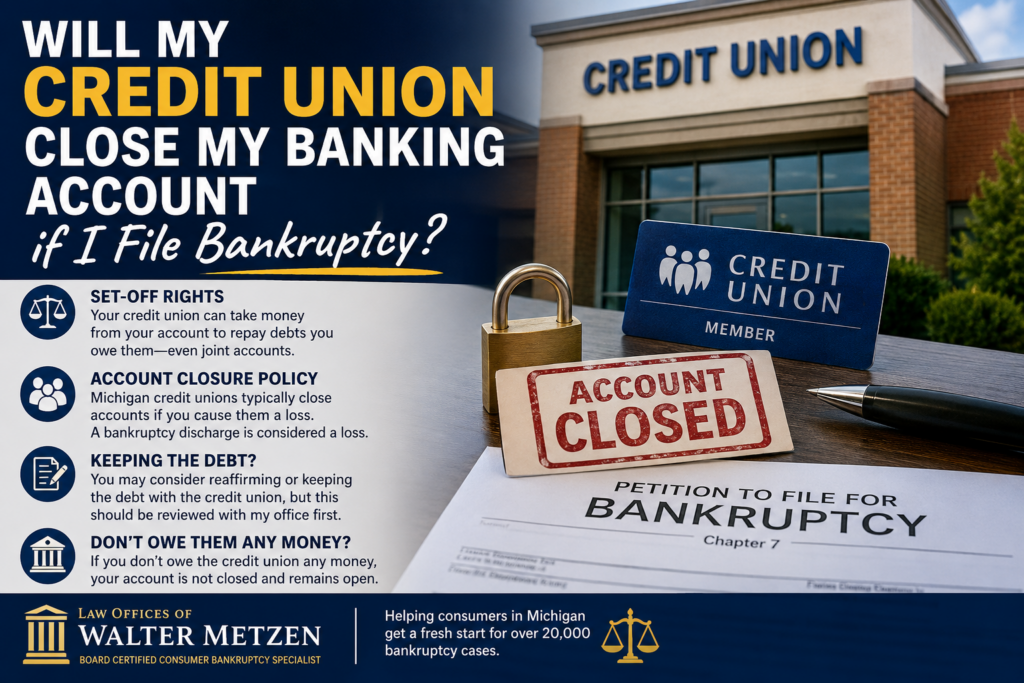
One of the most common questions I receive from clients is:
“If I file Chapter 7 bankruptcy, will my credit union close my checking and savings account?”
The answer depends on whether you owe money to the credit union.
If You Owe Your Credit Union Money
Credit unions operate differently than traditional banks. When you become a member of a credit union, you agree to its membership agreement and bylaws. If you later file bankruptcy and owe the credit union money, there are two important issues you need to understand.
The Credit Union’s Right of Setoff
Before filing bankruptcy, a credit union generally has the legal right to set off funds that you have on deposit against money that you owe them. In other words, if you have money in your checking or savings account and you owe the credit union on a loan, credit card, line of credit, or other obligation, the credit union may take the money in your account and apply it toward your debt.
This is why I frequently advise clients who owe money to a credit union not to leave substantial funds in their accounts before filing bankruptcy. Every situation is different, so this should always be discussed with my office before taking any action.
Another important point is that the right of setoff may extend to joint accounts. If your name appears on an account with a spouse, parent, child, or another relative, the credit union may have the ability to freeze or apply funds from that account to debts that you owe because you are one of the account owners. This can create unexpected problems for family members who share accounts.
Will the Credit Union Close My Account?
In my experience representing thousands of bankruptcy clients throughout Michigan, most Michigan credit unions have a policy of terminating a member’s banking relationship if that member causes the credit union a financial loss.
A bankruptcy discharge eliminates your personal obligation to repay many debts. From the credit union’s perspective, the discharged debt represents a financial loss. As a result, it is common for the credit union to:
- Close your checking account.
- Close your savings account.
- Terminate your membership.
- Revoke your credit union privileges.
While each credit union has its own policies, this is a very common practice in Michigan.
What If I Want to Keep My Credit Union Relationship?
Some clients would like to maintain their relationship with their credit union because they appreciate the service, have direct deposit established, or have favorable loan terms.
In some situations, a debtor may consider reaffirming a debt with the credit union or continuing to pay a loan in an effort to preserve the relationship. However, reaffirming a debt means that you remain personally liable for that obligation even after your bankruptcy is completed.
For that reason, whether reaffirming a credit union debt is in your best interest should always be carefully reviewed with my office before making that decision. In many cases, the benefits of receiving a complete bankruptcy discharge outweigh the advantages of keeping a credit union account.
What If I Don’t Owe the Credit Union Any Money?
The good news is that if you do not owe your credit union any money, filing bankruptcy generally does not result in the closure of your checking or savings account.
If the credit union is simply where you bank and there are no loans, credit cards, lines of credit, or other obligations owed to that institution, your membership and deposit accounts ordinarily remain open after your bankruptcy filing.
Many of my clients continue using their credit union exactly as they did before filing because the credit union has not suffered any financial loss.
Every Situation Is Different
Before filing bankruptcy, it is important to identify every financial institution where you have accounts and determine whether you owe that institution money. A little planning before filing can prevent unnecessary complications with frozen accounts, setoff issues, or interruptions in direct deposits and automatic payments.
If you are considering filing Chapter 7 bankruptcy and have accounts with a Michigan credit union, I will review your situation with you and discuss the best strategy for protecting your money and determining whether maintaining your relationship with the credit union makes financial sense.
Attorney Walter Metzen has represented more than 25,000 consumers in bankruptcy matters throughout Metropolitan Detroit. If you have questions about how bankruptcy may affect your credit union accounts, schedule a consultation before filing so we can develop a strategy tailored to your circumstances.