Can a Michigan Judgment Creditor Force the Sale of Your Home?

Published
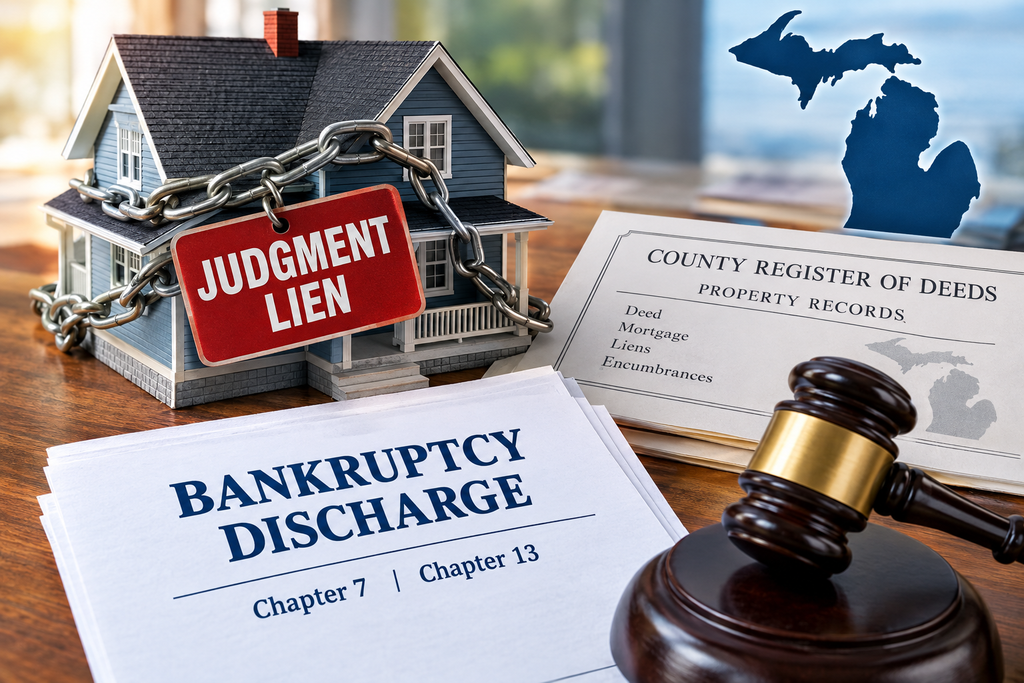
One of the questions I hear from people who have been sued by a creditor is:
“If the creditor gets a judgment against me and puts a lien on my house, can they force me to sell my home?”
The short answer is: a judgment lien can create a serious problem for your real estate, but a Michigan judgment creditor does not have a right to simply foreclose the judgment lien in the same way that a mortgage company can foreclose a mortgage.
There are, however, other methods available to a judgment creditor to attempt to collect a judgment, including execution against property in appropriate circumstances.
And there is another important consideration for someone facing a judgment lien: a bankruptcy discharge may provide a way to extinguish the judgment lien under Michigan law.
Table of Contents
- How Does a Creditor Get a Judgment Against You?
- What Does a Judgment Creditor Usually Do?
- What Does a Judgment Lien Actually Do?
- Can the Judgment Creditor Foreclose on Your House?
- What Usually Happens Instead?
- What If the Debtor Never Sells the House?
- What Happens When the Homeowner Dies?
- What Happens If You File Bankruptcy?
- I Wrote About This in an Earlier Post
- Don’t Ignore an Old Judgment Lien
- The Bottom Line
How Does a Creditor Get a Judgment Against You?
Usually, a creditor cannot simply record a lien against your house because you owe money.
The creditor first needs to establish its legal right to collect the debt and obtain a judgment.
For example, this can happen when someone falls behind on a:
- Credit card account;
- Medical bill;
- Personal loan;
- Retail credit account;
- Automobile loan; or
- Automobile deficiency balance after a vehicle is surrendered or repossessed and sold for less than the amount owed.
Suppose you finance a vehicle for $35,000 and later fall behind on the payments. The lender repossesses the vehicle and sells it for $15,000, leaving a $20,000 deficiency, after applicable credits and expenses.
If the lender obtains a judgment for the deficiency and you do not pay it, the creditor now has a judgment that it can attempt to enforce.
The same basic process can occur with an unpaid credit card or medical debt.
What Does a Judgment Creditor Usually Do?
Once a creditor has a judgment, it has considerably more collection tools available to it.
A judgment creditor may attempt to:
Garnish your wages.
The creditor can seek a court-authorized wage garnishment, causing money to be withheld from your paycheck and paid toward the judgment.
Garnish your bank account.
If the creditor identifies a bank account belonging to you, it may attempt to garnish funds in that account, subject to applicable exemptions and protections.
Garnish a Michigan income tax refund.
A judgment creditor may also have collection remedies involving money that would otherwise be paid to you.
Record a judgment lien against your real estate.
This is where your home can become involved.
Under Michigan’s Judgment Lien Act, a judgment lien attaches to the judgment debtor’s interest in real property when a proper notice of judgment lien is recorded with the Register of Deeds in the county where the property is located.
What Does a Judgment Lien Actually Do?
Think of a judgment lien as an encumbrance placed on your real estate.
The creditor does not necessarily take possession of your home. You generally continue to live in it, maintain it, pay your mortgage and taxes, and otherwise use the property.
But the judgment lien becomes part of the title history of the property.
This can become particularly important when you try to sell or refinance the house.
For example, suppose your house is worth $400,000 and you owe $250,000 on the first mortgage. You also have a $30,000 judgment lien recorded against the property.
If you sell the house, the mortgage must be dealt with first. Assuming the judgment lien is valid and enforceable, the judgment creditor can generally look to the equity available after liens senior to the judgment lien, taxes, and the costs of closing the transaction have been paid. Michigan law specifically addresses the amount available to a judgment creditor from a sale or refinance.
In practical terms, the judgment lien can follow the property and become a problem when you want to sell or refinance it.
Can the Judgment Creditor Foreclose on Your House?
This is where Michigan law is important.
A judgment lien created under Michigan’s Judgment Lien Act cannot itself be foreclosed.
Michigan Compiled Laws § 600.2819 specifically states that there is no right to foreclose a judgment lien created under the Act.
That is different from a mortgage.
If you stop paying your mortgage, the mortgage holder has a contractual and statutory foreclosure remedy against the property securing the mortgage.
A judgment lien is different.
The creditor does not simply go through a mortgage foreclosure process and take the house because you owe money on a judgment.
But That Does Not Mean Your House Can Never Be Sold to Satisfy the Judgment
There is an important distinction here.
Michigan courts have recognized that although the Michigan Judgment Lien Act does not permit foreclosure of the judgment lien itself, a judgment creditor may have other remedies for executing on a judgment, including the traditional method of levying on real property under Michigan law.
So I would not tell a client:
“A judgment lien can never result in the sale of your home.”
That is too broad.
The more accurate answer is that the judgment creditor cannot simply foreclose the judgment lien under the Michigan Judgment Lien Act, but other judgment-execution remedies may be available depending upon the circumstances.
This distinction can be very important when analyzing a particular case.
What Usually Happens Instead?
In many cases, the judgment creditor does not immediately attempt to force a sale of the debtor’s home.
Instead, the creditor records the judgment lien and waits.
Why?
Because the creditor knows that the debtor may eventually sell or refinance the property.
When that happens, the title company will discover the judgment lien.
The creditor can then be paid from the available proceeds to the extent provided by Michigan law.
This can effectively turn the judgment lien into a claim on the equity in the property.
For example:
Home value: $400,000
Mortgage: $250,000
Judgment lien: $30,000
There may be sufficient equity for the judgment creditor to be paid when the property is sold, assuming the lien is valid, enforceable and properly perfected and there are no other intervening issues.
The judgment creditor may therefore be willing to wait rather than immediately pursue more aggressive collection proceedings.
What If the Debtor Never Sells the House?
This is another reason judgment liens can remain on Michigan real estate for years.
A person may live in the same house for decades.
The creditor may continue to have an interest in the property subject to the expiration and renewal rules applicable to Michigan judgment liens.
Under MCL § 600.2809, a judgment lien generally expires five years after it is recorded, although it may be rerecorded once under the statute. The statute also addresses when a judgment lien is extinguished.
The creditor may therefore have an incentive to monitor the property and preserve its lien rights when permitted by law.
What Happens When the Homeowner Dies?
Death does not necessarily make a judgment lien disappear.
If the debtor dies while owning real estate subject to a valid judgment lien, the creditor’s rights may become an issue in connection with the debtor’s estate and the eventual disposition of the property.
If the property is eventually sold, the judgment lien may have to be addressed as part of the transaction.
The exact result can depend upon how the property is titled, whether there are surviving owners, the nature and priority of other liens, the status of the judgment, and the applicable probate and real-estate laws.
There is also an important Michigan rule concerning property owned by a husband and wife as tenants by the entirety. Generally, a judgment lien does not attach to an interest in entireties property unless the underlying judgment is against both spouses.
This is one reason that the way a home is titled can make a significant difference when dealing with a judgment creditor.
What Happens If You File Bankruptcy?
This is where bankruptcy can provide a very important solution.
When you receive a bankruptcy discharge, most dischargeable debts are eliminated as personal obligations.
But there is an important distinction between the debt and the lien.
A bankruptcy discharge does not automatically mean that every lien against your property disappears.
That is why judgment liens need to be examined separately.
Michigan Has a Particularly Important Statute for Discharged Judgment Liens
Michigan law provides a procedure that can extinguish a judgment lien after a bankruptcy discharge.
Under MCL § 600.2809(6)(d), a judgment lien is extinguished when a copy of the debtor’s bankruptcy discharge and a copy of the bankruptcy schedules listing the judgment debt are recorded with the Register of Deeds where the judgment lien is recorded.
There is an important exception if the bankruptcy court has determined that the debt is nondischargeable and that order is recorded with the Register of Deeds.
In other words, if you have a dischargeable judgment debt and the creditor previously recorded a judgment lien against your Michigan real estate, your bankruptcy discharge may provide a way to eliminate the judgment lien from the title to your property.
This can be extremely important if you want to sell or refinance your home after bankruptcy.
I Wrote About This in an Earlier Post
I recently wrote a separate article specifically about this issue:
How to Remove a Judgment Lien After Your Michigan Bankruptcy Discharge
In that article, I explain the distinction between the bankruptcy discharge and the judgment lien and discuss the Michigan procedure for recording the bankruptcy documents with the Register of Deeds.
I also discuss why, in many situations, it may not be necessary to reopen an old bankruptcy case simply because a title company discovers a judgment lien years after the bankruptcy discharge.
Don’t Ignore an Old Judgment Lien
If you are buying, selling or refinancing a home, an old judgment lien can suddenly become a very significant problem.
I have had former bankruptcy clients discover years later that a creditor had recorded a judgment lien against their property.
The client may reasonably say:
“But I filed bankruptcy years ago. I thought that debt was gone.”
The personal obligation may indeed have been discharged.
But the judgment lien may still appear in the land records until the appropriate steps are taken to extinguish it.
The good news is that Michigan law provides a mechanism for dealing with many of these liens after a bankruptcy discharge.
The Bottom Line
If a creditor obtains a judgment against you in Michigan, the creditor has several ways to attempt to collect it.
The creditor may garnish your wages, garnish your bank account, pursue other collection remedies and record a judgment lien against real estate that you own.
A recorded judgment lien can encumber your property and may have to be paid from available equity when you sell or refinance the property.
But a Michigan judgment lien is not the same thing as a mortgage. The Michigan Judgment Lien Act does not give the judgment creditor a right to foreclose the judgment lien itself. Other judgment-execution remedies may nevertheless be available in appropriate circumstances.
And if you subsequently file bankruptcy and receive a discharge of the judgment debt, Michigan law may allow the judgment lien to be extinguished by recording the bankruptcy discharge and the bankruptcy schedules listing the judgment debt with the appropriate Register of Deeds.
If you have an old judgment against you and own a home or other real estate in Michigan, I recommend finding out exactly what has been recorded against the property before assuming that the judgment has either disappeared—or that the creditor can take your house.
Every judgment lien situation is different, particularly when there are mortgages, other liens, exemptions, tenancy-by-the-entirety ownership, bankruptcy, or significant equity involved.
Walter Metzen
This article is for general informational purposes and is not a substitute for legal advice concerning your particular judgment, lien or bankruptcy case.