Should I Pay Off My Car Before Filing Bankruptcy?

Published

One of the questions I frequently hear from people considering bankruptcy is whether they should pay off their automobile loan before filing. Some people have been making extra payments for months, hoping to get their car paid off before they file Chapter 7 bankruptcy. Others are considering using their savings, tax refund, or money from another source to eliminate the car payment altogether.
At first glance, this might seem like a good idea. After all, who wouldn’t want to enter bankruptcy without a car payment?
Unfortunately, paying off your car before filing bankruptcy is not always a good idea. In fact, depending on how much equity you have in the vehicle, where the money comes from, and what other assets you own, paying off your car could actually make your bankruptcy more complicated.
As a bankruptcy attorney who has represented more than 25,000 people and practiced bankruptcy law exclusively for over 35 years, I have seen many situations where someone made a significant financial decision before filing bankruptcy without understanding the potential consequences.
Let’s look at some of the things you should consider before paying off your automobile loan.
Table of Contents
- 1. Paying Off Your Car Creates Equity in the Vehicle
- 2. Michigan Has an Automobile Exemption, But It Is Limited
- 3. Where Is the Money Coming From to Pay Off the Car?
- 4. Could Paying Off Your Car Be Considered a Preferential Transfer?
- 5. Should You Keep Making Your Regular Car Payments?
- 6. What If My Car Is Already Paid Off?
- 7. Should You Pay Off Your Car Before Filing Chapter 7 Bankruptcy?
- Contact an Experienced Michigan Bankruptcy Attorney Before Paying Off Your Car
1. Paying Off Your Car Creates Equity in the Vehicle
This is probably the most important consideration.
When you purchase a vehicle with financing, the lender generally has a lien on the automobile. If your vehicle is worth $20,000 and you owe $15,000, you have approximately $5,000 in equity.
If you pay off the $15,000 loan, you now own a vehicle worth $20,000 outright.
That sounds great, except that bankruptcy law looks at the value of the assets you own and the amount of equity you have in those assets.
In a Chapter 7 bankruptcy, a bankruptcy trustee has the responsibility of determining whether there are nonexempt assets that can be liquidated for the benefit of creditors.
Michigan has exemptions that allow people filing bankruptcy to protect certain amounts of equity in their automobiles. However, those exemptions are not unlimited.
If you pay off your car immediately before filing bankruptcy, you may convert money that otherwise could have been protected into additional equity in an automobile. If that equity exceeds the applicable exemption, you could create an asset that a Chapter 7 trustee may be interested in administering.
In other words, you could pay off your car only to discover that you have made it more difficult to protect it in bankruptcy.
2. Michigan Has an Automobile Exemption, But It Is Limited
Michigan bankruptcy filers generally have the option of using Michigan’s state exemptions or the federal bankruptcy exemptions, provided they meet the applicable eligibility requirements.
Both exemption systems provide protection for certain vehicle equity, but the amounts are limited and the applicable figures can change.
For example, if you own a vehicle worth $20,000 free and clear, that does not automatically mean you get to keep the entire $20,000 in a Chapter 7 bankruptcy.
The amount you can protect depends on the exemption system you use, whether you qualify for particular exemptions, and whether you have other available exemptions that can be applied to the vehicle.
There may also be a difference between what a vehicle is worth and what a trustee could realistically recover after considering the costs of selling it.
This is why I never recommend that someone pay off a car loan immediately before filing bankruptcy without first determining how much equity they will have and whether that equity can be protected.
3. Where Is the Money Coming From to Pay Off the Car?
The source of the money is extremely important.
Consider several examples:
Using money in your bank account.
Suppose you have $12,000 in your bank account and owe $12,000 on your vehicle. You decide to use your savings to pay off the car before filing bankruptcy.
You now have no money in the bank, but you own a vehicle with $12,000 more equity than you had before.
That may or may not be a good financial decision from a bankruptcy standpoint. Depending on the exemptions available, you might have been better off keeping the money in the bank rather than converting it into automobile equity.
Using a tax refund.
I frequently see people receive a substantial income tax refund and decide to use it to pay down or pay off their automobile loan before filing bankruptcy.
This can be problematic because a tax refund may be partially or entirely protected under the applicable exemptions, depending on the circumstances, whether or not it is an individual or joint refund and the source of the refund.
Using that money to pay off a vehicle could change the nature of the asset you own and potentially create additional nonexempt equity.
Using money borrowed from a family member.
Suppose your parents lend you $10,000 so you can pay off your automobile before filing bankruptcy.
You now have a vehicle with an additional $10,000 in equity, but you also owe your parents $10,000.
There are several issues to consider here, including whether the loan is properly documented, whether you intend to repay your parents, and whether any payments made to them before bankruptcy could be considered preferential transfers.
I would be particularly careful about borrowing money from family members to pay off a vehicle shortly before filing bankruptcy.
4. Could Paying Off Your Car Be Considered a Preferential Transfer?
Another issue that sometimes comes up is the bankruptcy preference statute.
Under Section 547 of the Bankruptcy Code, a bankruptcy trustee may be able to recover certain payments made to creditors within 90 days before filing bankruptcy. When the payment is made to an insider, such as a family member, the applicable preference period is generally one year.
Not every payment made before bankruptcy is a preference.
Generally, the trustee must establish that the payment was made on an existing debt, while the debtor was insolvent, and that the creditor received more than it would have received in a hypothetical Chapter 7 liquidation.
This is particularly important when paying off an automobile loan.
If the automobile lender has a valid, fully secured lien, paying off the loan does not automatically mean the lender received a preferential payment. The secured status of the loan and the value of the collateral matter.
However, if the vehicle is worth substantially less than the loan balance, or the payment involves other circumstances, the analysis can become more complicated.
Payments to family members who have loaned you money to purchase or pay off a vehicle deserve particular attention. A trustee may examine those payments much more closely.
5. Should You Keep Making Your Regular Car Payments?
This is a different question from whether you should pay off your car.
If you are planning to file Chapter 7 bankruptcy and want to keep your automobile, you generally need to consider whether you can afford the monthly payment and whether you intend to remain current on the loan.
In many cases, I recommend that clients continue making their regular automobile payments if they want to keep their vehicle and can afford to do so.
Filing Chapter 7 bankruptcy does not automatically eliminate an automobile lender’s lien. The lender generally retains its lien rights unless the debt is paid or the lien is otherwise legally eliminated.
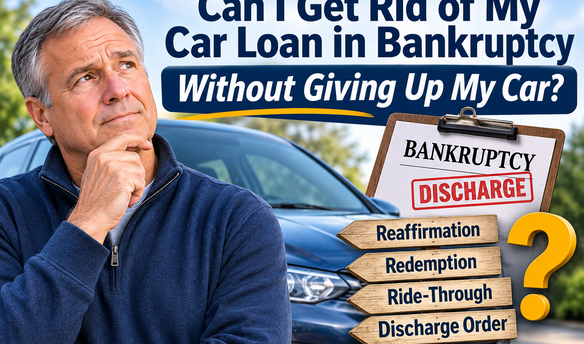
There are also reaffirmation agreements to consider. A reaffirmation agreement is an agreement to remain personally liable for an automobile loan after bankruptcy. Whether reaffirmation makes sense depends on the circumstances, including the value of the vehicle, the loan balance, the interest rate, and the client’s financial situation.
I generally approach reaffirmation agreements cautiously. There are situations where reaffirming a vehicle loan makes sense, but I do not believe someone should automatically reaffirm every automobile loan simply because the lender asks them to.
6. What If My Car Is Already Paid Off?
There is nothing inherently wrong with owning a vehicle free and clear when you file bankruptcy.
In fact, many people who file Chapter 7 own their automobiles outright.
The important question is how much equity you have and whether that equity can be protected by the applicable bankruptcy exemptions.
If your vehicle is worth $8,000 and the available automobile exemption and any additional applicable exemptions cover its value, there may be no problem at all.
On the other hand, if you own a vehicle worth $45,000 free and clear, the analysis may be considerably different.
The value of the vehicle, the applicable exemptions, and the potential costs of liquidation all need to be considered.
I have represented many people who own vehicles outright and have successfully filed Chapter 7 bankruptcy while keeping them. But the fact that a car is paid off does not automatically mean it is protected.
7. Should You Pay Off Your Car Before Filing Chapter 7 Bankruptcy?
My advice is simple: Do not pay off your automobile loan before filing bankruptcy without first discussing it with an experienced bankruptcy attorney.
There is no universal answer. In some situations, paying off a vehicle before filing may make sense. In other situations, it could be a costly mistake.
For example, if you have substantial cash that would otherwise be exposed to creditors and sufficient unused exemptions to protect the additional automobile equity, paying off the vehicle might be reasonable.
On the other hand, if paying off the vehicle would create nonexempt equity, you could be putting an otherwise protected asset at risk.
It is also important to remember that bankruptcy planning is not simply about automobiles. Your bank accounts, tax refunds, household goods, retirement accounts, real estate, and other assets all need to be considered together.
A decision that makes sense when looking at your car alone may not make sense when looking at your entire financial picture.
Contact an Experienced Michigan Bankruptcy Attorney Before Paying Off Your Car
I have practiced bankruptcy law exclusively for more than 35 years and have represented over 25,000 people in bankruptcy matters. I regularly help individuals throughout the Eastern District of Michigan determine whether Chapter 7 bankruptcy is the right solution and how to protect their assets when filing.
If you are considering bankruptcy and have an automobile loan, I would be happy to review your situation before you make a decision that could affect your ability to protect your vehicle.
The bottom line is this: Before you use your savings, tax refund, or borrowed money to pay off your car, find out how that decision will affect your bankruptcy exemptions.
Call my office at 313-962-4656 to schedule a consultation. We can discuss your automobile, your other assets, your debts, and whether Chapter 7 bankruptcy makes sense for you.
Law Offices of Walter Metzen
Detroit Bankruptcy Attorney