Can I Keep a Credit Card If I File Bankruptcy?

Published
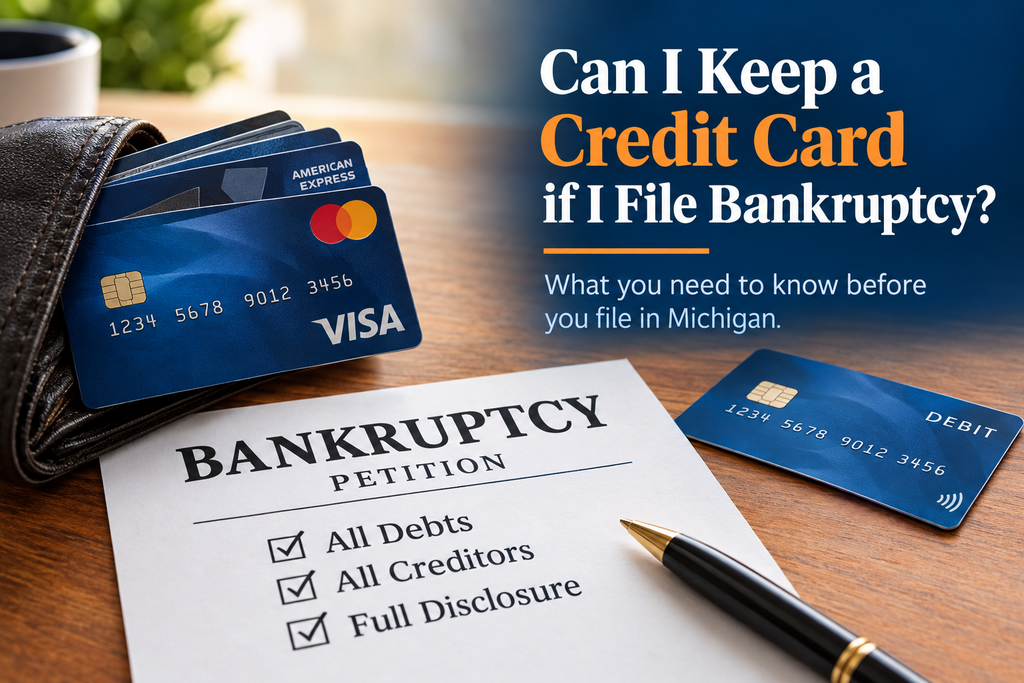
One of the questions I hear frequently from people considering bankruptcy is:
“Can I keep one of my credit cards if I file bankruptcy?”
Usually, the answer is no.
I understand why people ask. A credit card can feel like a safety net. People want to have one card available for an emergency, a hotel reservation, a rental car, or an unexpected expense.
Unfortunately, bankruptcy does not allow you to simply pick and choose which credit cards you want to keep.
Table of Contents
- You Have to List All of Your Creditors
- The Credit Card Company Will Usually Find Out Anyway
- What If My Credit Card Has a Zero Balance?
- What About a Credit Union Credit Card?
- You Can Keep Your Debit Card
- Move Your Automatic Payments Before Filing
- Can I Get a Credit Card After Bankruptcy?
- What About Financing a Car?
- The Bigger Question Is Whether You Really Need the Credit Card
- The Bottom Line
You Have to List All of Your Creditors
When you file bankruptcy, you are required to disclose your creditors and debts. This includes credit cards that have a balance and even credit cards that have a very low balance.
You cannot decide that a particular credit card is not important enough to list because you want to continue using it.
Your bankruptcy schedules are signed under penalty of perjury. Failing to disclose a creditor is therefore not something I would ever recommend trying to do.
This sometimes surprises people because they will tell me:
“But I only owe the credit card company $35 and I want to keep them.”
That does not necessarily make a difference. If you have an account with the creditor, it needs to be properly disclosed.
The Credit Card Company Will Usually Find Out Anyway
Another misconception is that you can simply leave a credit card off your bankruptcy paperwork and continue using it.
That generally does not work.
Credit card companies have systems and services that monitor bankruptcy filings. Once you file, the creditor will generally learn that you have filed bankruptcy whether or not you have a balance on the card.
Batch Credit Sweeps: Major issuers—including American Express, Chase, and Wells Fargo—regularly run automated sweeps of public records and national credit bureau databases (Experian, TransUnion, and Equifax).
Internal Notification Systems: Electronic filing systems notify banking networks so rapidly that an issuer’s computer system often flags a debtor’s social security number before the electronic filing fee is fully processed by the court clerk.
Risk Cancelation: Because your credit agreement allows the issuer to cancel your borrowing privileges at will for an adverse credit event, they will shut down the account as a systemic risk-mitigation measure the moment the bankruptcy is flagged.
The creditor will then make its own decision concerning the account. In most cases, the account will be closed or the credit line will no longer be available.
This is true even if you have been a good customer and have never missed a payment.
The bankruptcy filing itself is often enough for the credit card company to take action.
What If My Credit Card Has a Zero Balance?
A zero-balance credit card is still a credit card account. While you are not legally required to list a credit card on your bankruptcy schedules if it has a strict zero balance at the time of filing, the account will almost certainly be closed anyway.
Because bankruptcy schedules require you to list all of your creditors (entities to whom you owe money), a credit card company with no outstanding balance does not hold a claim against your estate and technically does not belong on bankruptcy Schedule E/F.
People sometimes think:
“If I owe them nothing, why would bankruptcy affect the card?”
The answer is that the credit card company is extending you potential future credit. Once it receives notice of your bankruptcy filing, it may decide that it no longer wants to extend that credit.
There are occasional situations where a creditor does not immediately close an account, but I would never advise a client to file bankruptcy expecting to keep a particular credit card.
You should assume that your credit cards will no longer be available after you file.
What About a Credit Union Credit Card?
Credit unions can sometimes handle bankruptcy accounts differently from large national credit card companies.
For example, a credit union may have a long-standing relationship with its member and may have different policies concerning a credit card with no balance.
However, there is an important distinction between what sometimes happens and what you can count on happening.
I would not recommend keeping a credit union credit card out of your bankruptcy schedules because you hope the credit union will allow you to keep it.
The account still needs to be properly disclosed.
You Can Keep Your Debit Card
There is an important difference between a credit card and a debit card.
Your debit card uses money that is already in your checking account. It is not a loan from the bank.
Therefore, filing bankruptcy does not ordinarily cause you to lose your debit card simply because you filed bankruptcy.
You can generally continue using your checking account, debit card, direct deposit and online banking after filing.
Of course, you need to be careful about where you bank if you owe money directly to that bank or credit union. There can be issues involving a bank’s right of setoff when you owe the institution money. This is something I discuss with clients before they file.
Move Your Automatic Payments Before Filing
If you have automatic payments charged to a credit card, I recommend reviewing them before filing bankruptcy.
Think about your:
- Cell phone bill
- Streaming services
- Insurance
- Internet
- Utilities
- Memberships
- Software subscriptions
- Online services
- Other recurring charges
If the credit card is closed after your bankruptcy filing, those automatic charges may no longer go through.
It is much better to move important recurring payments to your checking account or another appropriate payment method before you discover that the credit card has been shut down.
Can I Get a Credit Card After Bankruptcy?
Yes.
One of the things that surprises many of my Chapter 7 clients is how quickly credit card offers can start coming back after bankruptcy.
Some lenders offer secured credit cards, where you provide a security deposit that generally establishes the credit limit. Other lenders may eventually offer an unsecured credit card.
The important thing after bankruptcy is not to immediately go back to the same pattern of borrowing that caused the financial problem in the first place.
A credit card can be useful for rebuilding credit if it is used carefully and the balance is paid in full.
You do not need a wallet full of credit cards to rebuild your credit.
What About Financing a Car?
People are also often concerned that losing their credit cards means they will never be able to borrow money again or purchase a car after filing bankruptcy.
That is not the case.
People who have filed bankruptcy can obtain automobile financing, although the interest rate and terms will depend upon the lender, the borrower’s income, down payment, credit history and how much time has passed since the bankruptcy.
In my experience, bankruptcy is not the end of your ability to obtain credit. It is often the beginning of rebuilding your credit on a much more manageable financial foundation.
The Bigger Question Is Whether You Really Need the Credit Card
There is one other point I make to my clients.
If you are filing bankruptcy because your credit cards are carrying large balances that you cannot realistically pay, having those same credit cards available after bankruptcy may not be the financial safety net you think it is.
If you have $20,000, $30,000 or $50,000 of credit card debt that you cannot afford to pay, the problem is not that you need more available credit.
The goal of bankruptcy is to deal with the debt and give you an opportunity to start over.
That means accepting the fact that you will probably lose your existing credit cards and then rebuilding your credit afterward.
The Bottom Line
Can you keep a credit card when you file bankruptcy? Usually, no.
You are required to properly disclose your creditors, including credit cards that have no balance. The credit card companies will generally learn about your bankruptcy filing and may close the accounts.
Your debit card is different. It uses money in your bank account rather than extending you credit, so you can generally continue using your debit card after filing.
If you are considering bankruptcy and are concerned about losing your credit cards, that should not be the deciding factor in whether bankruptcy is appropriate for you. The more important question is whether bankruptcy can eliminate or restructure your debt and give you a realistic opportunity to get your finances back under control.
I have been representing people in Michigan in bankruptcy for more than 30 years. If you are considering bankruptcy and want to know what will happen to your credit cards, bank accounts, automobile, home and other property, give me a call. I will be happy to discuss your situation with you.